Lafayette People Search!
- ✔ Contact Info
- ✔ Phone Numbers
- ✔ Criminal Records
- ✔ Income Info
- ✔ Neighbors
- ✔ People's Age
- ✔ Property Ownership
- ✔ And Much More
Search People In Lafayette, LA
Searching for people in Lafayette, LA? Enter a name and press the search button and our USA people search will quickly locate and tell you where in Lafayette that person lives. The result includes address, telephone number, criminal records, income, property records, and more.
The report includes:
- Address
- Phone Number
- Criminal Records
- Public Records
- Vehicle Records
- Income
- Occupation
- Education
- Property Ownership
- Age
- Gender
- Speeding Tickets
- Arrests
- Assaults
- Court Records
- Conviction Details
- Sex Offenses
- Jail Records
- Police Report
- Driving Violations
- Mugshot(s)
- Bankruptcy Filings
- Email Addresses
- Social Accounts
- Census Records
- Articles From Newspapers
- Immigration Documents
- Photos
- Birth
- Marrige
- Divorce
- Death
- Military Records
.......and much more.

Lafayette, Louisiana
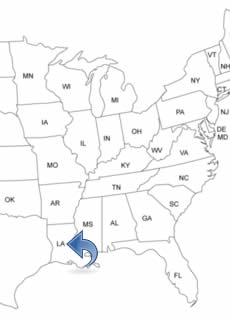
Lafayette is located in the south-central part and is the fifth largest city in the U.S. state of Louisiana. (The fourth if you don't coun't Metairie). The city is frequently recognized as the happiest city in America.
To See And To Do In Lafayette
- Downtown Lafayette
- Alexandre Mouton House
- The Vermilionville Village
- Cathedral of St John the Evangelist
- Acadian Village
- Acadian Cultural Center
- Acadiana Center for the Arts
- Zea Rotisserie and Bar
- Lafayette Science Museum
- Paul and Lulu Hilliard University Art Museum
- Wildcat Brothers Distilling
- Girard Park Center
- Vestal Restaurant
- Sans Souci Fine Crafts Gallery
- Blue Moon Guest House and Saloon
- Louisiana Airborne Memorial Bridge and Monument
History Of Lafayette - Timeline
Long before the first European came, the area was occupied for centuries by Indigenous tribes. Atakapa, Chitimacha, Opelousa, and other Indigenous Peoples hunted, fished, and traded with each other.
In 1730, French trappers and traders traded with Native groups. In 1751, small groups of French settlers arrived and started cattle ranching to supply meat to New Orleans.
In 1760, the French settler Gabriel Fuselier de la Claire purchased land from the Attakapas chief. In 1765, French-speaking refugees from Acadia, Canada, established themselves in the area after being expelled by the British.
In 1776, Girard Park was established. It originated from a land grant to Rene Trahan, it later became a cotton plantation owned by former Louisiana Senator Basil Crow. In 1781, Jean Mouton received Spanish land grants and became one of the area's largest landowners.
In 1790, the original Louis J. and Marie Amelia Arceneaux House was built. The original Alexandre Latiolais House was built. It was owned by the Domingue family who were involved in education, local community, and agriculture.
In 1800, Jean Mouton built a house that later became the Alexandre Mouton House. In 1803, the region was under U.S. control.
In 1821, Jean Mouton founded the town. He established a trading post and layed out the town, and named it St. Jean du Vermilionville, but later shortened the name to Vermilionville.
In 1823, Lafayette Parish was created from St. Martin Parish. In 1824, A Catholic church was established. Vermilionville was established as the administrative center of Lafayette Parish. A wooden courthouse was built. In 1825, several small trading stores were established.
In 1827, the Alexandre Latiolais House was enlarged. In 1835, the original Sidney Martin House was built by Jean Baptiste Mouton, son of Lafayette's founder. Sidney Martin, who was an innovator, and agriculturalist, bought it 1918. The Vermilion Inn was built. It operated as the first inn in Vermilionville. (Cafe Vermilionville).
In 1836, Vermilionville was incorporated. In 1840, the Brandt House was built. William Brandt served as a notary public and court recorder for the town. In 1848, the Charles H. Mouton House was built. Charles Homere Mouton was a judge, attorney, politician, and the grandson of Lafayette's founder.
In 1858, First United Methodist Church was built. It was a small frame church. In 1863, Union forces occupied Vermilionville. In 1865, Freetown neighborhood was established by free people of color. In 1877, Louis Joseph and Amelia Arceneaux moved the original house (built in 1790) and modified it.
In 1879, railroad construction reached the area. In 1880, the Daigle House, also known as the Revillon House, was built. Jules Joseph Revillon was a merchant, builder, and civic leader in the town.
In 1884, the Town of Vermilionville was renamed to Lafayette. In 1889, a City Hall was built. In 1890, the Lafayette Hardware Store was built. It originally hosted two separate stores. In 1898, the University of Louisiana at Lafayette was founded. The Old Lafayette City Hall building was constructed.
In 1900, the Elrose house was built by Crow Girard. He was a businessman and developer, and the first president of the Bank of Lafayette. There were 3,314 people living in the town.
In 1901, the Southwestern Louisiana Industrial Institute was established. (UL Lafayette). The J. Arthur Roy House was built. Joseph Arthur Roy was a businessman, farmer, civic leader, and a longtime president of the First National Bank.
In 1904, the Gordon Hotel was built. In 1905, the Bank of Lafayette building was constructed. (The Old Guaranty Bank Building). In 1906, the building now known as Old Lafayette City Hall was sold to the government to be used as city hall.
In 1911, a railroad depot was constructed. In 1913, the Holy Rosary Institute opened as a Black Catholic girls' school. In 1916, the construction of the Cathedral of St. John the Evangelist was completed. The Hope Lodge No. 145, a Freemasons lodge, was built.
In 1924, the First United Methodist Church was built. In 1925, he Maurice Heymann building was built, and the N. P. Moss School was constructed. In 1926, Lafayette High was built. In 1928, the Evangeline Hotel and the Tribune Building downtown opened.
In 1933, the Lafayette Coca-Cola Bottling Plant started in a smaller warehouse facility. In 1938, Lafayette Charity Hospital opened. In 1939, a new larger city hall was built. In 1942, the Lafayette Municipal Library system was created.
In 1946, Lafayette Public Library officially opened. In 1950, the multi-purpose arena, Blackham Coliseum, opened. In 1964, the Hilliard Art Museum was founded. In 1969, Lafayette Science Museum was established.
In 1971, Cajun Field, the university football stadium, opened. In 1985, Cajundome arena opened. In 2000, the soccer club Lafayette Swamp Cats was founded. In 2001, the Lafayette Amtrak Station was damaged by fire. In 2004, the Acadiana Center for the Arts opened. In 2007, the reconstructed Lafayette Amtrak Station opened.
In 2026, there were 121,715 people living in the city.