Tallahassee People Search!
- ✔ Contact Info
- ✔ Phone Numbers
- ✔ Criminal Records
- ✔ Income Info
- ✔ Neighbors
- ✔ People's Age
- ✔ Property Ownership
- ✔ And Much More
Search People In Tallahassee, FL
Searching for people in Tallahassee, FL? Enter a name and press the search button and our USA people search will quickly locate and tell you where in Tallahassee that person lives. The result includes address, telephone number, criminal records, income, property records, and more.
The report includes:
- Address
- Phone Number
- Criminal Records
- Public Records
- Vehicle Records
- Income
- Occupation
- Education
- Property Ownership
- Age
- Gender
- Speeding Tickets
- Arrests
- Assaults
- Court Records
- Conviction Details
- Sex Offenses
- Jail Records
- Police Report
- Driving Violations
- Mugshot(s)
- Bankruptcy Filings
- Email Addresses
- Social Accounts
- Census Records
- Articles From Newspapers
- Immigration Documents
- Photos
- Birth
- Marrige
- Divorce
- Death
- Military Records
.......and much more.
Tallahassee, Florida
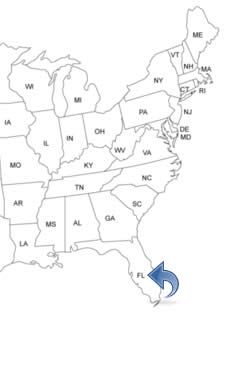
Tallahassee is located in the north-western part and is the capital and the ninth largest city in the U.S. State of Florida. The city has a vibrant college-town atmosphere, and it has many hiking, biking, and paddling trails, and parks.
As the state capital, it houses the Florida State Capitol, Supreme Court, and other state agencies. The city has a colder climate in winter compared to southern Florida.
To See And To Do In Tallahassee
- The Grove Museum
- The Capitol Museum
- Goodwood Museum and Gardens
- Florida State Capitol Building
- Alfred B. Maclay Gardens State Park
- Knott House Museum
- Tallahassee Museum
- Proof Brewing Company
- Tallahassee Automobile Museum
- Mission San Luis de Apalachee
- The St. Marks Lighthouse
- Governor's Square Mall
- Florida Governor's Mansion
- Ology Brewing
- John G. Riley House and Museum
- Black Archives Research Center and Museum
- Lake Tribe Brewing Company
- Bradley's Country Store
History Of Tallahassee - Timeline
Long before the first European arrived, the region was inhabited for thousands of years by indigenous peoples, most notably the Apalachee Indians.
In 1528, Spanish explorer Panfilo de Narvaez explored the area. In 1539, Hernando de Soto camped in modern-day Tallahassee. In 1656, Mission San Luis de Apalachee (San Luis de Talimali), a Spanish Franciscan mission was built.
In 1818, General Andrew Jackson invaded the area and destroyed the Indian villages. In 1820, Seminole Indians still lived there, and a few white planters had settled in the area. These settlers brought their families and enslaved people to create large-scale cotton plantations.
In 1823, Dr. William Simmons and John Lee Williams selected the site of Tallahassee to be the new capital of the Florida Territory before any buildings were built.
In 1824, the capital relocated from Pensacola to newly founded Tallahassee. The name came from a Muskogean Indian word often translated as old fields. Octavia Walton, the 14-year-old daughter of Florida Territorial Secretary George Walton came up with the name. The first group of white settlers arrived. These early settlers built the first log cabin capitol building, which was ready for the first Legislative Council session held in November. 15 to 20 houses were built around the log cabin Capitol.
In 1825, the City of Tallahassee was incorporated. The area quickly grew with land speculators, politicians, and planters, including a mix of European-American settlers and enslaved people. In 1826, construction began on the first Capitol building.
In 1828, the Blackwood Plantation was established by Charles Black. In 1829, The Blackwood-Harwood Plantations Cemetery was established. In 1831, the Williams House was built. William Williams was a banker and developer. The St. Marks Lighthouse was originally built.
In 1832, First Presbyterian Church established. The Verdura Plantation was built by Benjamin Chaires. He was a planter and a banker and one of Florida's earliest millionaires.
In 1834, the Tallahassee-St. Marks Railroad was built. The Goodwood Plantation (Old Croom Mansion) was built. Hardy Bryan Croom, who founded the Goodwood Plantation, was a planter, botanist, politician, naturalist, and enslaver.
In I835, the Columns house was constructed by Benjamin Chaires. The construction of the First Presbyterian Church began. The Grove Plantation was built. Richard Keith Call, who bult it, was a wealthy slaveholder. He fought in the first Seminole war, and was a political leader. In 1936, the United States Courthouse was built. In 1841, the Union Bank building was constructed.
In 1843, a fire destroyed many of the buildings in downtown. The Knott House was built. It was the temporary headquarters of the Union Army in Tallahassee. In 1845, the Old Capitol was built. In 1846, the Southern Journal newspaper was in print.
In 1856, the Brokaw-McDougall House was built. Peres Bonney Brokaw was an entrepreneur, and civic leader. In 1857, the Florida State College for Women was founded. In 1858, the Tallahassee station was built. It is one of the oldest railroad buildings in Florida. The First Baptist Church was built.
In 1859, the Pisgah United Methodist Church was built. In 1870, the Rollins House was built. Charles H. Rollins was an African American carpenter, shoemaker, and politician. In 1883, the David S. Walker Library was organized. The original City Hall was built.
In 1885, the construction of the Flavius C. Coles Farmhouse began. Flavius Charles Coles was a cotton broker. In 1887, the State Normal College for Colored Students opened. In 1890, the John Gilmore Riley House was built. John Gilmore Riley was an African American businessman, and educator, who was born a slave. In 1898, the Sacrament Catholic Church building was constructed.
In 1902, a new Capitol building was constructed. In 1904, Florida Christian Advocate newspaper was in print. The Old City Waterworks was built. In 1905, the Weekly True Democrat newspaper was published. Florida State College for Women was renamed Florida Female College.
In 1907, Florida Governor's Mansion was built. In 1908, the Carnegie Library at FAMU was built. In 1909, the State Normal College for Colored Students was renamed Florida Agricultural and Mechanical College for Negroes. Florida Female College was renamed Florida State College for Women.
In 1910, the Leon High School opened. In 1921, the Woman's Working Band House was built by a group of African-American women. In 1923, the Caroline Brevard Grammar School was built. The Alfred B. Maclay Gardens State Park was created by financier Alfred B. Maclay and his wife, Louise Fleischmann Maclay. It started as a winter home and a masterpiece of floral architecture.
In 1926, the Los Robles Gate was built. In 1927, the Covington House was built. Wade Hampton Covington was a lumber and turpentine businessman. The Exchange Bank Building was built. The Woman's Club of Tallahassee building was constructed. In 1929, Dale Mabry Field airport opened.
In 1930, Ritz Theatre opened. A Fire Department was established. In 1935, WTAL radio began broadcasting in the city. In 1937, the African American cemetery, the Greenwood Cemetery, was established. In 1948, the Capitol Drive-In theater opened. In 1950, the Florida State University College of Business was established. The Doak Campbell Stadium opened.
In 1953, the Alfred B. Maclay Gardens State Park was donated to the state. In 1955, WCTV television began broadcasting. In 1957, the Junior Museum was founded. In 1966, Florida State University College of Law was founded. In 1968, riots broke out after Martin Luther King Jr. was assassinated. It was originally a student protest but later escalated into a riot.
In 1971, Tallahassee Shopping Mallopened. In 1977, Florida State Capitol skyscraper was completed. The Museum of Florida History was established. In 1979, Governor's Square Mall opened. In 1988, the current City Hall was built. In 1989, the Tallahassee International Airport opened. In 1992, the Knott House museum was established. In 1996, the Riley Museum of African American History and Culture was established.
In 2026, there were 201,875 people living in the city.