Sterling Heights People Search!
- ✔ Contact Info
- ✔ Phone Numbers
- ✔ Criminal Records
- ✔ Income Info
- ✔ Neighbors
- ✔ People's Age
- ✔ Property Ownership
- ✔ And Much More
Search People In Sterling Heights, MI
Searching for people in Sterling Heights, MI? Enter a name and press the search button and our USA people search will quickly locate and tell you where in Sterling Heights that person lives. The result includes address, telephone number, criminal records, income, property records, and more.
The report includes:
- Address
- Phone Number
- Criminal Records
- Public Records
- Vehicle Records
- Income
- Occupation
- Education
- Property Ownership
- Age
- Gender
- Speeding Tickets
- Arrests
- Assaults
- Court Records
- Conviction Details
- Sex Offenses
- Jail Records
- Police Report
- Driving Violations
- Mugshot(s)
- Bankruptcy Filings
- Email Addresses
- Social Accounts
- Census Records
- Articles From Newspapers
- Immigration Documents
- Photos
- Birth
- Marrige
- Divorce
- Death
- Military Records
.......and much more.

Sterling Heights, Michigan
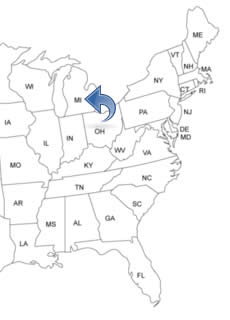
Sterling Heights is located in the south-eastern part and is the fourth largest city in the U.S. State of Michigan. It is a northern suburb of Detroit, and is one of the safest big cities in Michigan.
It is a family-friendly city and is recognized for its excellent schools. The Sterlingfest Art and Music Fair event in the summer, has a crowd of around 125,000 people over a three-day period.
To See And To Do In Sterling Heights
- Upton House Museum
- Heritage Church
- Nature Center
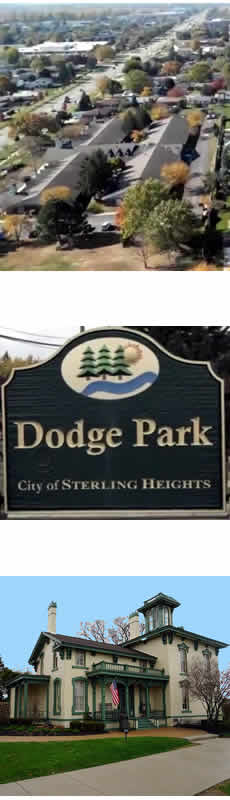
- Dodge Park
- MJR Marketplace Cinema
- Play Golf
- Lakeside Mall
- Gator Jake's Bar and Grill
- Sterling Heights Community Center
- Clinton River Canoe and Kayak
- Michigan Lottery Amphitheatre at Freedom Hill
History Of Sterling Heights - Timeline
Indigenous tribes lived in the area thousands of years before the first European came.
In 1620, French explorers, fur trappers, and missionaries were the first Europeans to arrive in the area. The French developed early road paths, and fur trappers came to trade with Native tribes.
In 1780, William Tucker was deeded a large tract of land by local Native American leaders. He is regarded as the first English-speaking settler in the Sterling Heights area.
In 1800, the area was sparsely settled. In 1817, Nathaniel Squire built a cabin. In 1818, Joseph Wampler surveyed the land that would become Sterling Heights. In 1825, the opening of the Erie Canal brought new settlers into what would become Sterling Township, who established farms.
In 1827, the area was organized as part of Shelby Township. George A. O'Keefe was a landowner in section three of Sterling Heights. He was an attorney, and land owner, and he served as a judges, a prosecutor, and a state representative.
In 1830, Linus Jacox built a house. In 1832, Lewis Drake bought government land in what is now Dodge Park.
In 1835, the area was separated from Shelby Township to become Jefferson Township. The Edgerton Cemetery was established on the Edgerton family farm.
In 1838, Jefferson Township was renamed Sterling Township. In 1839, the first recorded tombstone burial at Edgerton Cemetery was for Nancy Curtis. A Methodist Church was built.
In 1840, more settlers arrived and established homesteads on the fertile land. Robert McElroy was the first documented African-American living in Sterling Township. In 1845, Burr School was built. In 1848, the Haff Farmhouse was built.
In 1854, the Frederick and Mary Hetchler House was built. In 1867, the Upton House Museum was built by the farmers William and Sarah Aldrich Upton. In 1869, John Warrenner built his farmhouse.
In 1870, a wave of German immigrants arrived in Sterling Township. Hannah Moore was the first documented African-American landowner in the township. In 1875, the Albert and Mary Saal House was built on their farm. John and Philena Rice built their residence.
In 1887, the Ruby House was built. John and Margaret Ruby were farmers.
In 1900, approximately 1,900 people lived in the Township. In 1950, the shift from farming to suburban, residential development began rapidly, following the post-WWII housing boom.
In 1953, the Sterling Heights Assembly Plant (Chrysler missile plant) was originally built as a jet engine facility. In 1956, Ford Motor Company opened the the Sterling Axle Plant. In 1966, the Sterling Heights Police Department was established.
In 1968, Sterling Township was incorporated as the City of Sterling Heights. Gerald N. Donovan was the first mayor of Sterling Heights. In 1969, the City Hall was dedicated.
In 1975, a printing facility for The Detroit News opened. In 1976, the Lakeside Mall opened. In 1980, Volkswagen acquired the former Chrysler missile plant and converted it for automobile production.
In 1983, Sterlingfest Art and Music Fair began at Dodge Park. In 1991, the Michigan Lottery Amphitheatre at Freedom Hill opened. In 2000, the Nativity of the Virgin Mary Macedonian Orthodox Cathedral opened. In 2019, the gold-colored art sculpture Halo was installed.
In 2026, there were 133,573 people living in the city.